 GUIDES • ITINERARIES • SMARTER TRAVEL

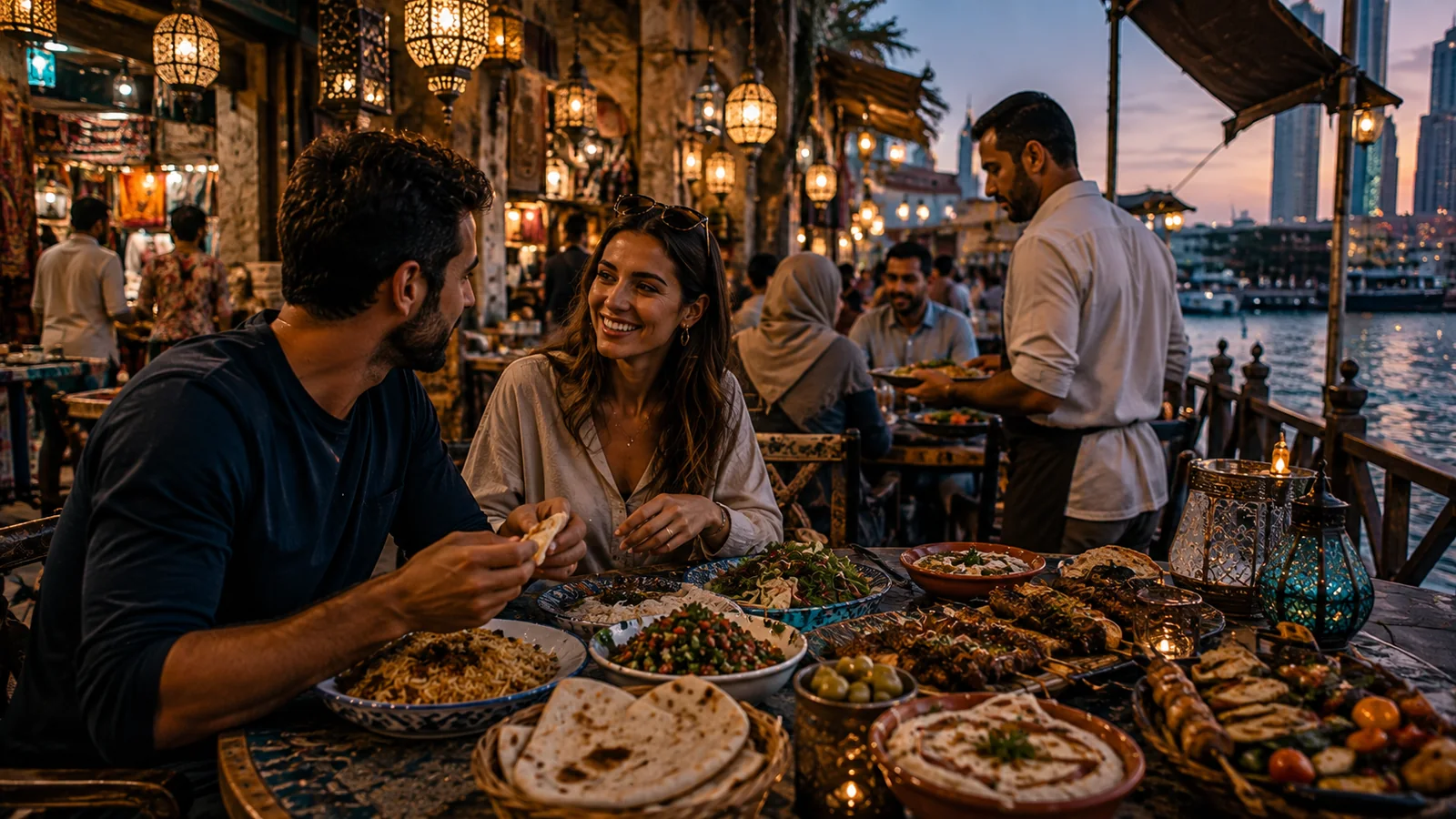
Dubai’s food identity cannot be reduced to a list of “traditional dishes” or celebrity restaurants. The city’s dining culture reflects Emirati heritage alongside generations of residents from South Asia, the wider Middle East, Africa, the Philippines, Europe and elsewhere. For a first-time visitor, the most rewarding approach is to combine local context, neighbourhood restaurants, markets and one or two special meals rather than eating every day inside an international hotel.
Start with Emirati food
Make space for food connected directly to the UAE’s culinary traditions. Look for restaurants or cultural experiences that explain ingredients, preparation and the social context of the meal rather than using “local” only as a marketing label. Ask staff for recommendations and be willing to share dishes so you can try more than one flavour.
Emirati food is one part of Dubai’s story, not the only part. The city’s modern identity is also shaped by the communities that live and work there.
Explore the wider Middle Eastern table
Lebanese, Syrian, Palestinian, Jordanian, Iranian and other regional cuisines are widely represented. Mezze-style meals work particularly well for families and groups because they encourage sharing. Grilled meats, breads, salads, rice dishes and vegetable preparations vary significantly by restaurant and regional tradition, so avoid assuming one menu represents the whole Middle East.
Do not miss South Asian Dubai
Indian and Pakistani communities have played an important role in the city’s development, and some of Dubai’s most satisfying meals can be found far from luxury dining rooms. Neighbourhood restaurants may offer biryani, kebabs, curries, breads, breakfast dishes and regional specialities at prices that make repeated exploration possible.
Use current reviews to check operational quality, but do not judge a local restaurant by décor alone. Busy tables, a focused menu and consistent recent feedback can be more informative than polished design.
Use breakfast to explore
A hotel breakfast is convenient, but spending one morning in a local café or neighbourhood restaurant gives the trip a different rhythm. Breakfast can also be a good time to explore before the hottest part of the day. If your hotel package includes breakfast every day, you do not have to abandon it completely; simply leave room for one local experience.
Markets and older districts add context
Food is more meaningful when connected to place. Older commercial districts, markets and small restaurants show how ingredients, trading routes and migrant communities influence everyday eating. Pair a meal with a wider Old Dubai itinerary rather than travelling across the city solely for a viral dish.
Our first-time Dubai guide can help you combine food with the Creek, heritage areas and neighbourhood walking.
Luxury dining still has a place
Dubai is a major premium restaurant market, and a high-end meal can be worthwhile when the cooking, service, location and atmosphere form a genuine experience. The mistake is assuming expensive automatically means more authentic or more memorable. Choose one special dinner for a clear reason rather than filling the trip with restaurants selected only by reputation.
Waterfront and hotel restaurants
Views can justify a premium, particularly at sunset, but understand what you are paying for. A hotel restaurant may offer convenience and excellent service; a neighbourhood restaurant may offer stronger value and a closer connection to everyday city life. A good itinerary can include both.
How much should you budget for food?
Dubai can be expensive and surprisingly affordable at the same time. The traveller who eats only in resorts will experience a very different daily cost from someone who mixes hotel meals with local restaurants. Set a food budget by type: simple breakfast or lunch, neighbourhood dinner, and one premium experience. This is more useful than a single unrealistic “daily average”.
Our Budget Travel coverage treats meals as part of the complete trip cost, not an afterthought.
Dietary and religious requirements
Dubai’s international dining scene provides broad choice, but requirements should still be confirmed directly with the restaurant when they matter. Ask about allergens, vegetarian or vegan preparation, and any specific dietary standard rather than relying solely on a directory label or an old review.
Reservations: where they matter
Popular fine-dining restaurants, weekend brunches and high-demand sunset venues may need advance booking. Ordinary neighbourhood eating is often more flexible. Do not reserve every meal before arrival; leaving several open slots makes it easier to respond to recommendations, weather and the part of the city you are actually in.
How to judge a food recommendation
Restaurant information changes faster than landmark information. Before following a recommendation, check the publication date, latest opening status, recent reviews, location, booking rules and current menu or price range. An article that was accurate two years ago may now describe a restaurant that has moved, changed concept or closed.
Food photography and respectful behaviour
Photograph your meal if you want, but avoid turning other diners, staff or local residents into background content without consideration. Ask before closely photographing people. In busy restaurants, keep photography brief so it does not interfere with service or other guests.
Build meals around the neighbourhood
Dubai’s distances make this particularly important. If you are spending the afternoon in Old Dubai, eat there. If your evening is in the Marina, choose a nearby restaurant. If you are staying on the Palm, decide which nights are worth leaving the resort. Linking food to the itinerary saves time and often produces a more coherent experience.
A balanced first-time food plan
Across a five-day visit, aim for an Emirati meal, one broader Middle Eastern experience, South Asian neighbourhood food, a relaxed café or breakfast, and one meal chosen for a special setting or culinary ambition. Add spontaneous discoveries around those anchors. The goal is not to complete a food checklist; it is to understand Dubai through the people, neighbourhoods and histories that meet at the table.
Frequently asked questions
What food should first-time visitors try in Dubai?
Start with Emirati food, then explore the city’s wider Middle Eastern and South Asian dining scenes. Dubai’s food identity is multicultural, so no single cuisine represents the whole city.
Do I need to eat in expensive restaurants to experience Dubai?
No. Neighbourhood restaurants, cafés and markets can be among the most memorable and affordable parts of the trip. One premium meal can be added for setting or culinary ambition.
Should I book Dubai restaurants in advance?
Book high-demand fine dining, brunches or sunset venues when they are central to your trip. Leave some ordinary meals flexible so you can eat near the neighbourhood you are exploring.
Sources and further reading
Primary and supporting references used to verify or contextualize this article.
- Dubai food and drink
Official destination information used for broad food-and-drink context.

No approved comments yet. Start a thoughtful conversation.