 GUIDES • ITINERARIES • SMARTER TRAVEL

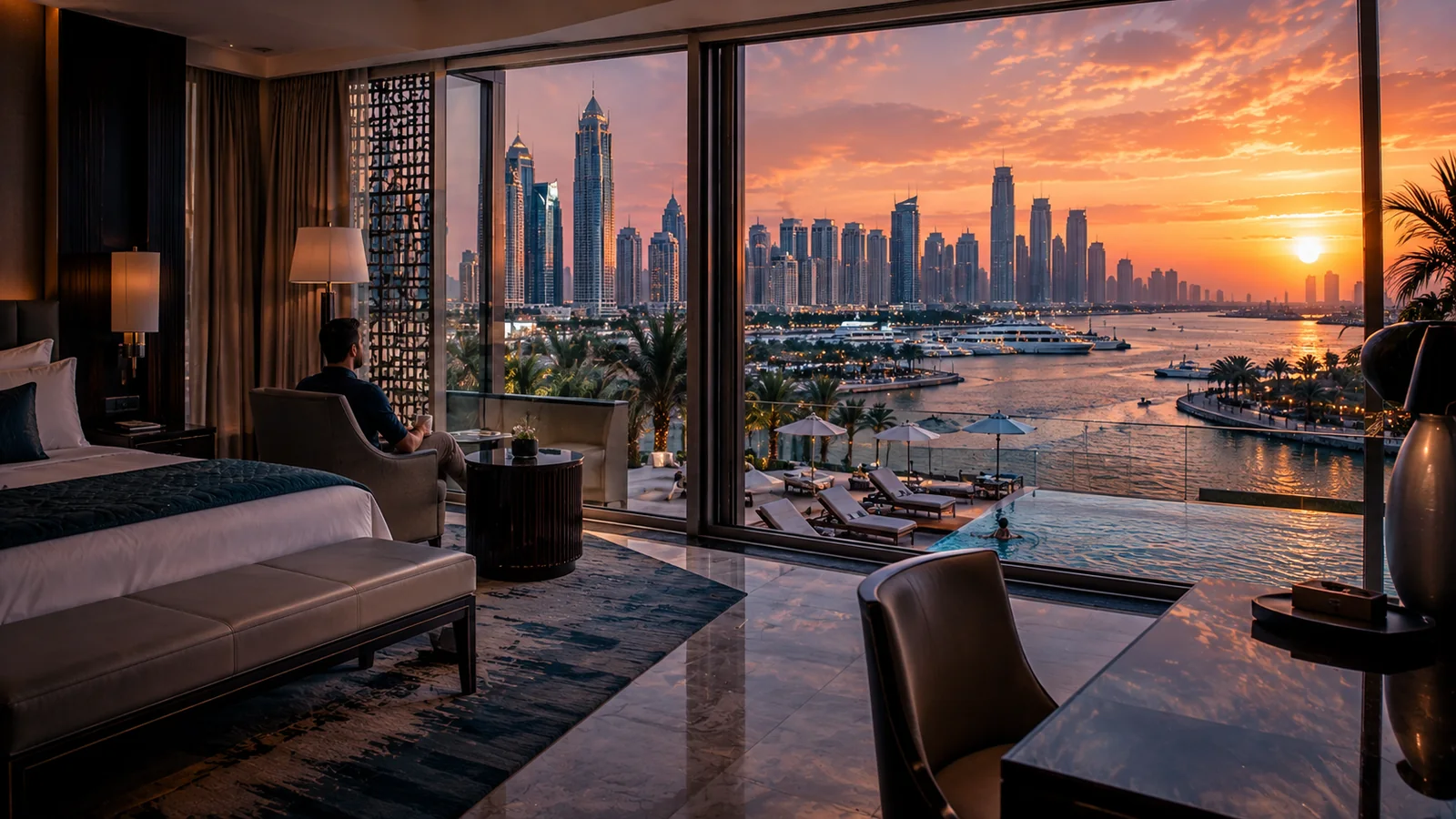
Choosing where to stay in Dubai begins with choosing an area, not a star rating. The city is spread across a long coastal and urban corridor, and a room that looks like a bargain can become poor value if every day requires long transfers. The best location depends on whether you want first-time sightseeing, beach and resort time, nightlife, family facilities, local food or a short stopover.
Downtown Dubai: best for first-time sightseeing
Downtown places you near some of the city’s most recognisable modern attractions and works particularly well for shorter stays. It suits travellers who want a polished urban environment, convenient access to major sights and easy evening dining without moving far after a full day.
The trade-off is price. Premium dates can be expensive, and the area is not a beach resort. If your trip is built around the coast, paying a Downtown premium may not make sense. Choose it when central sightseeing is genuinely the priority.
Dubai Marina: best for waterfront evenings
The Marina combines high-rise hotels, restaurants, pedestrian activity and a modern waterfront setting. It is especially attractive for couples and visitors who want to walk in the evening rather than return immediately to a hotel after sightseeing.
It can also work for travellers dividing time between the beach and city attractions. Check the exact hotel position, because “Marina” can describe a broad area and walking distance to the places you care about still matters.
Palm Jumeirah: best for a resort-led holiday
Palm Jumeirah is a strong choice when the hotel itself is one of the main reasons for travelling. Large resorts may provide beaches, pools, children’s facilities, spas and multiple restaurants, making it possible to spend meaningful time on-property.
The downside is that sightseeing elsewhere can require longer journeys. A Palm stay makes more sense for a relaxed holiday than for a visitor who plans to leave the hotel early every morning and return late every night. Calculate how many resort days you will actually use before paying for the facilities.
Jumeirah: best for beach plus city
Jumeirah can provide a more balanced experience for travellers who want access to the coast while remaining connected to restaurants and city life. The atmosphere is lower-rise than the Marina or Downtown, and different stretches of Jumeirah feel distinct.
For families and couples, this can be a useful middle ground between a destination resort and a pure sightseeing hotel. As always, inspect the map and transport options around the exact property.
Old Dubai: best for culture and value
Areas around Deira, Bur Dubai and the Creek offer a different view of the city, with traditional commercial districts, local restaurants and access to heritage areas. Accommodation can provide better value than the luxury coastline, particularly for travellers who care more about exploration than resort facilities.
Old Dubai also suits repeat visitors who want to understand more of the city’s history and everyday commercial life. It is less convenient for some newer beachfront attractions, so plan the itinerary accordingly.
Airport areas: best for short stopovers
When a stay is only one night, airport proximity may be more valuable than a famous address. A traveller with an early departure gains little from a remote beach resort if most of the visit is spent transferring. Airport hotels and nearby districts can also work for business travellers with limited free time.
Which area works for families?
Families should think about room configuration, pools, breakfast, children’s facilities and the number of daily transfers. A resort may cost more but reduce the need to buy entertainment every hour. Alternatively, a well-located apartment-style or city hotel can work better for families who want attractions and restaurants nearby.
Review the Things to Do you genuinely expect to visit, then place them on a map before choosing the hotel. Three long taxi journeys every day can undermine both budget and patience.
Which area works for couples and solo travellers?
Couples often appreciate the Marina, Jumeirah or a resort environment when evenings and dining are central to the trip. Solo travellers may value a well-connected district with easy transport, active public spaces and convenient dining. There is no universal “best” area; the right choice reduces friction for the way you travel.
How to compare hotel value
Do not judge value only by the nightly rate. Check whether breakfast is included, what taxes or mandatory charges apply, whether beach access is private or public, the room category, cancellation terms and how much local transport the location will require. A cheaper room that adds repeated taxi costs may not be cheaper in practice.
Use recent reviews to identify recurring issues, but read them critically. One emotional complaint is less useful than a consistent pattern involving cleanliness, construction noise, transport or room condition.
Choose the room as carefully as the hotel
Dubai properties can contain many room categories with very different views, sizes and access benefits. Confirm whether the photograph you are looking at represents the room you are actually booking. Families should verify bed configuration and occupancy rules. Travellers working during the trip should check desk space and internet information rather than assuming every luxury room is equally practical.
Think about arrival and departure
An early morning arrival can create several hours before standard check-in. Ask the hotel about luggage storage or early check-in options rather than assuming the room will be available. Likewise, a late-night flight may make a later checkout valuable. These details often matter more than a decorative upgrade.
Build hotel choice into the complete trip
Before payment, compare the hotel with your flight times, airport, planned attractions and meal preferences. Our Flights guide helps with arrival logistics, while What to Eat in Dubai can show whether you want to stay close to neighbourhood dining or rely on hotel restaurants.
The simplest decision rule
Choose Downtown for concentrated first-time sightseeing, the Marina for modern waterfront evenings, Palm Jumeirah for a resort-led holiday, Jumeirah for beach-and-city balance, Old Dubai for heritage and value, and airport areas for very short stays. Then compare properties within that area on total cost, room suitability and recent operational quality. Location first, hotel second is usually the more reliable Dubai booking strategy.
Frequently asked questions
What is the best Dubai area for a first visit?
Downtown is convenient for concentrated modern sightseeing, while the Marina and Jumeirah work well for travellers who want more coastal time. The best area depends on the itinerary.
Is Palm Jumeirah a good base for sightseeing?
It can be, but it is strongest for a resort-led holiday. Travellers planning full sightseeing days elsewhere should compare transfer time before paying a resort premium.
Can staying in Old Dubai save money?
Often, but value depends on the exact property and your plans. Old Dubai can offer more affordable accommodation and local food, while some newer coastal attractions require longer journeys.
Sources and further reading
Primary and supporting references used to verify or contextualize this article.
- Accommodation and Dubai neighbourhood guidance
Official visitor information used for general accommodation and destination context.

No approved comments yet. Start a thoughtful conversation.